If you are buying from abroad, the single biggest risk you face is not a bad neighbourhood or a slow lawyer — it is the "Omo Onile" problem. Loosely translated as "children of the land owner", Omo Onile are individuals or groups who claim ancestral ownership of land and use that claim to sell the same plot to multiple buyers, demand "development fees" at every construction stage, or seize land outright.
How big is the problem, really?
According to the Lagos State Real Estate Regulatory Authority (LASRERA), more than 40% of land disputes in Lagos can be traced to Omo Onile interference. Industry estimates put the cost of property fraud to the Nigerian economy at around $4 billion a year. Diaspora buyers are disproportionately targeted for one simple reason: you are not there to push back when a group of young men appears at your site demanding payment before the blocks can be laid.
The three ways it hurts you
- Double (and triple) sales. The same parcel is sold to several buyers, each with a "Deed of Assignment" that looks genuine.
- Stage-by-stage extortion. Even on land you legitimately bought, fees are demanded to dig the foundation, to reach the lintel, to roof — each backed by the threat of stopping work.
- Outright grabbing. Unattended plots are simply resold or built on while you are abroad.
The buyers who lose money almost always have one thing in common: they paid cash, on the ground, to someone they met through an introducer. Remove the cash and the introducer, and you remove the leverage.
How merge2own takes the threat off the table
Our model is built specifically to defeat this. We verify ownership and community status remotely before a kobo moves — confirming the seller's title against the registry and checking whether the underlying family land has been properly released by government. Critically, you never pay cash to anyone on the ground: funds move only through regulated escrow and are released against verified milestones, not against a demand at the gate. Because every transaction runs through merge2own, there is no informal payment for "land boys" to intercept, and the developer or seller's details are never exposed to you directly — removing the very channel scammers rely on.
The distance between you and a safe purchase is not a plane ticket — it is the right process. Verify first, pay through escrow, and let a regulated party stand between you and the people who profit from confusion.
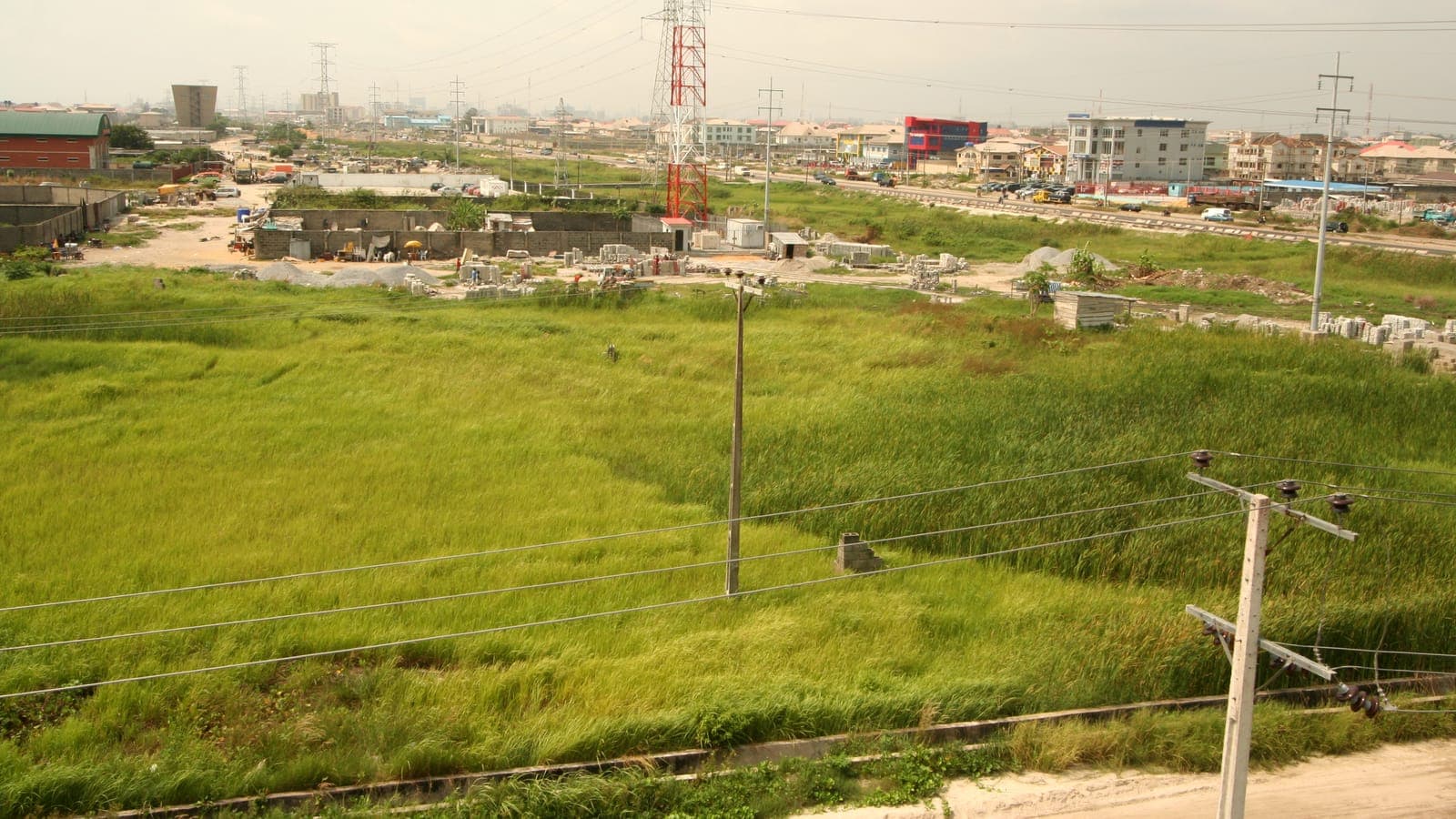
Photo: Jeremy Weate — CC BY 2.0, via Wikimedia Commons.
Sources
Frequently asked questions
What is "Omo Onile" in Nigerian real estate?+
Omo Onile refers to people or families who claim ancestral ownership of land and use that claim to sell plots multiple times, demand informal fees at each construction stage, or seize unattended land. LASRERA attributes over 40% of Lagos land disputes to this.
How can a diaspora buyer avoid Omo Onile scams?+
Never pay cash on the ground or to an introducer; verify the seller's registered title and the land's government release (excision/gazette) before paying; and transact only through a regulated party that holds funds in escrow and releases them against verified milestones — which is how merge2own operates.
Is land fraud really that common in Nigeria?+
Yes. Industry estimates put property fraud at roughly $4 billion a year, and forged documents plus double sales are the most frequent scam types — which is why independent, registry-level verification before payment is essential.
Discussion
Join the conversation — it's free.